
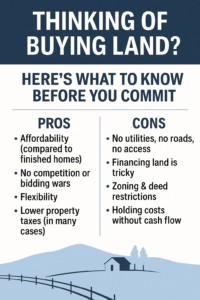
 Thinking of Buying Land? Here’s What to Know Before You Commit (Pros, Cons & Real-Life Mistakes)
Buying land can feel like the ultimate blank canvas — freedom, flexibility, and long-term potential. But what most people don’t realize is that land investing comes with risks that aren’t always obvious until after the purchase.
Whether you’re looking to build your dream home, develop rental property, or hold land for future profit, this guide breaks down the real pros and cons of buying land — with examples from real buyers and investors.
🟢 THE PROS OF BUYING LAND
✅ 1. Affordability (Compared to Finished Homes)
Raw land is often cheaper upfront than buying an existing home or commercial building — especially in growing areas just outside city limits.
Real Example:
In 2020, a Houston-area buyer picked up 1.5 acres in Rosharon for $45,000. By 2024, lots in the same area were going for $90,000+. He doubled his money without lifting a finger.
✅ 2. No Competition or Bidding Wars
Land buyers face far less competition than residential homebuyers, especially when it comes to acreage or off-market lots. That means more negotiating power and lower-pressure timelines.
✅ 3. Flexibility
Land gives you options:
-
Build when you’re ready
-
Hold and wait for appreciation
-
Lease to farmers, RV owners, or storage operators
-
Develop into multiple units, mobile homes, or short-term rentals
✅ 4. Lower Property Taxes (In Many Cases)
Raw or undeveloped land usually has a much lower taxable value than improved properties — and may qualify for agriculture or wildlife exemptions.
Texas Tip: Properties over 10 acres may qualify for AG exemption with proper documentation, which can reduce your annual tax bill dramatically.
🔴 THE CONS OF BUYING LAND
❌ 1. No Utilities, No Roads, No Access = No Use
Many first-time land buyers are shocked to find:
-
No electricity nearby
-
No water well or sewer system
-
Dirt or private roads requiring maintenance or legal easements
Real Example:
A buyer in Liberty County bought 2 acres for $38K, then spent $25K running utilities and building a gravel road — before they could even place a mobile home.
❌ 2. Financing Land Is Tricky
Most banks won’t offer traditional mortgages for vacant land. You’ll need:
-
A land loan (higher down payment, 10–30%)
-
Seller financing (if available)
-
USDA or farm credit (if rural and ag-based)
📌 Tip: Always get pre-qualified before shopping, and understand your lender’s acreage restrictions and usage requirements.
❌ 3. Zoning & Deed Restrictions Can Block Your Plans
Just because you own it doesn’t mean you can build on it.
Check:
-
Zoning ordinances (residential, commercial, agricultural?)
-
Flood zones or FEMA designations
-
Easements, oil/gas rights, pipeline setbacks
-
HOA or subdivision deed restrictions
Real Example:
One buyer planned to build a barndominium on 3 acres — but found out post-closing that the lot had a 2,500 sq ft minimum site-built home restriction and no metal exteriors allowed.
❌ 4. Holding Costs Without Cash Flow
Land doesn’t bring in monthly rent (unless leased). Meanwhile, you’ll pay:
-
Property taxes
-
Maintenance (fencing, brush clearing)
-
Insurance (liability or vacant land coverage)
So make sure it fits your overall budget or investment plan.
🔍 QUESTIONS TO ASK BEFORE BUYING LAND
-
Does the land have legal access (public road, deeded easement)?
-
Are there utilities nearby (water, sewer, power, internet)?
-
Is the land in a floodplain or conservation zone?
-
What are the zoning laws and restrictions?
-
Can I build or develop immediately — or are permits/approvals needed?
-
Are there any liens, encumbrances, or easements?
📈 Smart Ways to Profit from Land
✔️ Buy & Hold: Let appreciation do the work (especially near highways or fast-growth areas)
✔️ Owner Finance It: Sell the land with terms and collect monthly income
✔️ RV or Tiny Home Sites: Add hookups and rent as short-term lots
✔️ Billboard or Storage: Lease frontage or flat lots to local businesses
✔️ Agriculture Use: Lease to farmers or livestock owners to qualify for exemptions
🧠 Final Thoughts: Land is a Long Game — Play It Smart
Land can be one of the most profitable (and low-maintenance) ways to invest in real estate — if you do the research first.
But it’s not always “easy money.” What you save upfront could cost you thousands in development issues, permitting headaches, or zoning surprises.
📲 If you’re thinking about buying land in Texas for residential, commercial, or recreational use — I can help you review zoning, run comps, estimate utility costs, and make sure your plan actually works. DM me “LAND REVIEW” and let’s talk.